Water Damage Restoration and Cleanup in Addison, TX
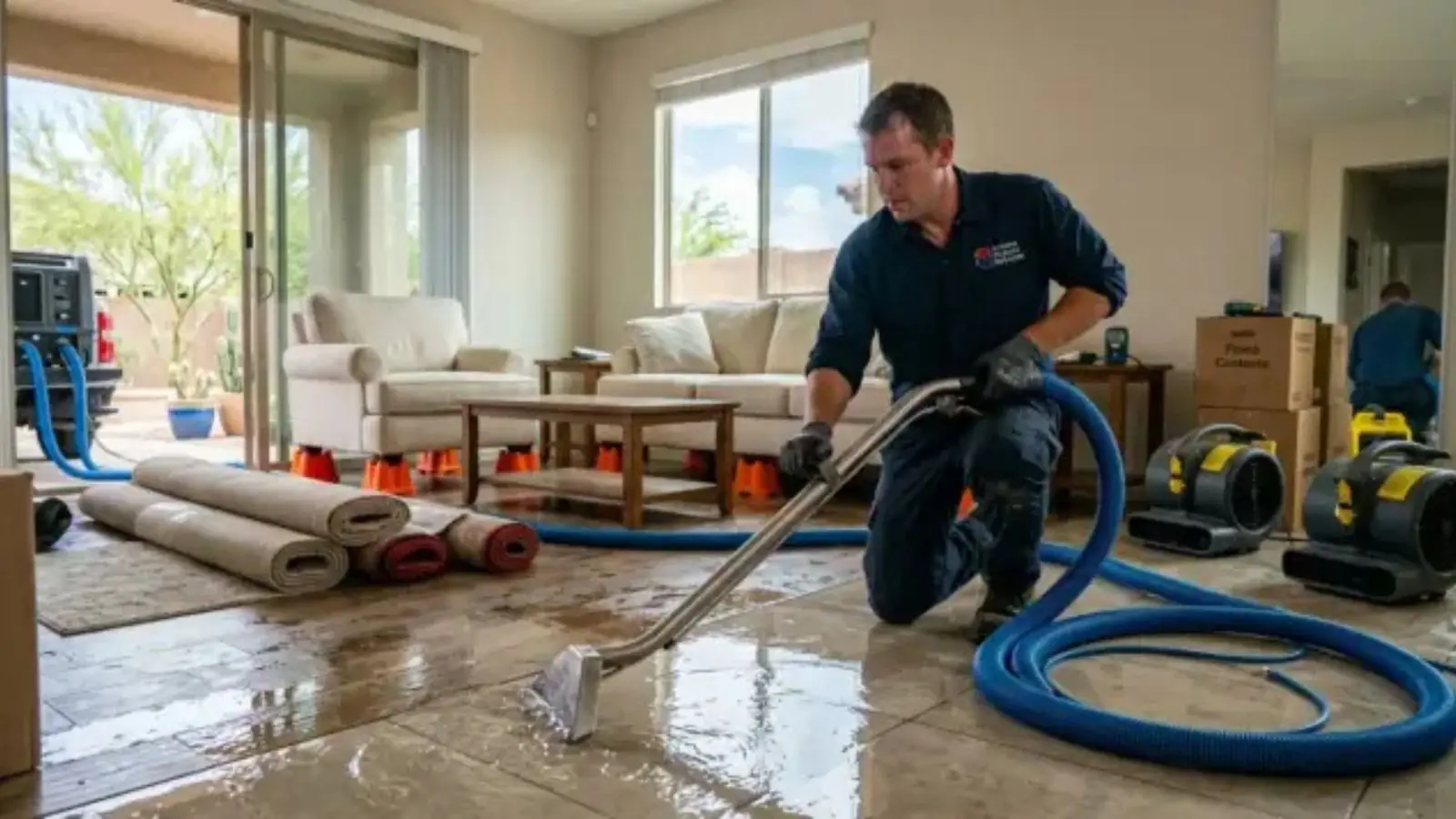
Water damage restoration is the work of stopping the water, drying the structure, cleaning what got wet and rebuilding what cannot be saved. Addison Water Damage Pros dispatches around the clock for water damage cleanup in Addison, TX, from burst pipes and failed water heaters to storm water and sewage backups.
- Licensed and insured
- Scope and price explained before work starts
- Same-day response when available
How dispatch works
Water spreading right now?
Shut off the main valve if you can reach it, then call. Dispatch answers at night, on weekends and on holidays.
What we handle in Addison

Water Damage Repair
Drywall, insulation, flooring, paint and trim rebuilt once the structure reads dry.
View service →
Water Mitigation
The first 24 to 72 hours: shutting off the source, starting extraction and setting drying equipment.
View service →
Water Damage Cleanup
Debris out, wet materials removed, surfaces sanitized and contents sorted after the water stops.
View service →
Emergency Water Removal
Pumps and extraction units pull standing water from floors, carpet and crawl spaces.
View service →
Flood Damage Restoration
Storm water, groundwater and sewage backups, including Category 2 and 3 water.
View service →
Mold Remediation
Containment, removal and cleaning of mold that followed a leak, with testing explained.
View service →What to do while water is still spreading
Stop the source
Close the fixture shutoff or the main valve. The Town of Addison says the inside universal shutoff is typically in a garage, laundry room or closet, and some yards have a valve under a green plastic cover.
Think about power
Turn off power to wet areas only if you can reach the panel without standing in water. If water touches outlets or the panel, stay out and call 911 or the utility first.
Protect what you can
Lift valuables, rugs and electronics above the wet line. Photograph everything before you move it, because the photos help with an insurance claim.
Keep people out
Keep children and pets away from sewage or storm water. Contaminated water needs gloves, boots and a crew, not a mop.
How we work
24/7 dispatch
The line is staffed around the clock, because pipes burst at 3 a.m. as often as at noon.
Scope before work
A technician inspects, takes readings and photos, then explains the scope and price before anything starts.
Documented loss
Moisture logs, photos and scope notes give your insurer a clear record of what happened.
Licensed and insured
Work is performed by licensed and insured restoration professionals.
From first call to dry structure
- 1
Call dispatch
Describe the water source, the rooms involved and whether anyone can reach the shutoff.
- 2
Inspect and document
Moisture meters and thermal imaging find wet materials, and photos record the loss.
- 3
Extract and dry
Extraction units remove standing water, then air movers and dehumidifiers dry the structure.
- 4
Clean and rebuild
Damaged materials come out, surfaces are cleaned, and repairs start once readings meet drying goals.
What drives the cost of water damage work
Every loss is different, so we do not quote prices from a web page. These five factors decide most of the scope, and a technician walks through each one before work starts.
| Factor | How it changes the job |
|---|---|
| Water category | Category 1 (clean supply water) is the simplest. Category 2 and 3 water adds removal, sanitizing and safety steps. |
| Area and materials | Carpet and pad, drywall, insulation, hardwood and cabinets all absorb and dry differently. |
| Drying days and equipment | More wet rooms mean more air movers and dehumidifiers running for more days. |
| Hidden moisture | Water inside walls, under floors or above ceilings extends the scope beyond what you can see. |
| Rebuild scope | Patching a ceiling is a small repair. Replacing floors and cabinets is a larger one. |
Want your real number? Call the 24/7 line and describe the loss.
Documentation your insurer can read
Records that support a claim
We record moisture readings, take photos before and after tear-out, and write a scope of work. Texas Department of Insurance guidance is to photograph or video damage before repairs and to keep damaged items until the adjuster has seen them.
Most homeowner and renter policies cover sudden and accidental water damage, such as a burst pipe or toilet overflow. Policies usually do not cover gradual leaks, and home policies do not cover floods, so check your policy and ask your insurer what applies to your loss.
For a large loss, such as water through several rooms or a vacant unit, the documentation matters even more. Ask your insurer about timing, because TDI notes that hidden water damage usually must be reported within days after you first see it.
Water damage in a compact Dallas County town
Addison covers about 4.4 square miles of Dallas County, and Dallas borders it on the north, east and south. Dispatch routes cover Carrollton to the west, Richardson to the east, Plano to the north and Coppell to the west of Carrollton.
The Town of Addison buys its water entirely from the City of Dallas, according to the Town's water quality report. For you, that means a main break or a pressure problem may start on a utility line rather than inside your home, so report leaks at the meter to the Town and call us for the damage inside.
Town crews respond around the clock to water main breaks, meter leaks and clogged or overflowing wastewater mains, and the Town says there is no charge for those emergency services. Only an authorized agent may turn water on or off at the meter, so use your own shutoff valve first.
Repairs that touch plumbing may need a permit. The Town's building safety pages list water heater replacement and plumbing work as permit items, while cosmetic work such as painting and carpeting is not. Ask Building Inspection before you start, and expect a registered contractor.
Crews work around Addison Circle, Vitruvian Park and Les Lacs Park, along Belt Line Road and Midway Road, and near Addison Airport and the Dallas North Tollway corridor. A tight street grid helps, but it also means upstairs leaks in multi-unit buildings often reach neighbors fast. Call before the water travels.
North Texas also has a freeze history worth planning for. The National Weather Service recorded a low of -2 degrees at DFW Airport on February 16, 2021, with two stretches at or below freezing of 93 and 139 hours. Pipes that survive one freeze can fail when they thaw, so check for slow leaks after a hard freeze.
Nearby towns we serve from Addison
Beyond Addison, dispatch covers four neighboring cities. Each page has local detail for that city.
Frequently asked questions
Yes. The dispatch line is open 24/7, including nights, weekends and holidays. Same-day response is offered when crews are available, and the person on the line will tell you what to do while you wait.
Shut off the water source first. If you cannot find the shutoff, the Town of Addison offers emergency shutoff help for leaks and burst pipes.
A technician inspects the loss, takes moisture readings and photos, and writes a scope of work. The scope and price are explained before work starts, so you can compare it with what your insurer expects.
Price depends on the water category, the area and materials affected, drying days and the rebuild scope.
Most homeowner and renter policies cover sudden and accidental water damage, but policies usually do not cover gradual leaks, and flood damage needs a separate flood policy. Ask your insurer what applies to your loss, and read your policy.
We document the damage with photos and moisture readings. We do not decide coverage and we cannot promise a claim result.
No. Drying equipment is placed and monitored by the crew, because equipment that is set up wrong can leave wet materials behind. Daily moisture readings show when the structure meets drying goals.
No. Restoration dries and repairs what water already damaged. Waterproofing or foundation work that keeps water out is a different trade, and we will say so if that is what your home needs.
A large loss gets a longer inspection, a room-by-room moisture map and a written scope that your insurer can review. Drying equipment and crew time scale with the number of wet rooms.
If the unit is vacant or the water ran for days, say so on the call, because that changes the first steps.
The published industry standards are ANSI/IICRC S500 for water damage restoration and ANSI/IICRC S520 for mold remediation. Ask any company, including us, whether its crews work to them.
Damage spreading right now?
Call the 24/7 line and describe what you see. Same-day response is offered when crews are available.
☎ Call (972) 945-2885